Fine Art Moving & Crating
Fine Art Moving and Crating in Santa Barbara
A painting can look tough and still be one bad bump away from a crack, a dent, or an imprint you can never undo. Whether it's a gallery-wrapped acrylic, a century-old oil, or a bronze for the front courtyard, fine art moving in Santa Barbara
comes down to three decisions: how the surface is protected, how the piece is supported, and whether it should travel wrapped or in a crate.
Below is how we think about each one, including the guide we use to decide when to crate artwork, how we pack oil paintings differently from acrylics, and a quick tool to see which level of protection fits your piece.
When to Crate Artwork: A Simple Guide
Crating isn't always necessary, and it isn't always overkill. Here's how to tell the difference.
CRATE IT
A crate is the right call when…
- The piece is high in value or can't be replaced (one-of-a-kind, sentimental, or documented).
- It's oversized and flexes or needs more than two people to carry safely.
- It's traveling long distance, by freight, or will be handled many times.
- It's going into storage before or after the move.
- The surface is fragile: thick impasto, craquelure, flaking paint, loose pastel or charcoal.
- The frame is antique, gilded, or ornate, or the piece is behind large glass.
- It's a sculpture with protrusions, thin supports, or a separate base.
WRAP IT
Padded art wrap is often enough when…
- The move is local with a single pickup and delivery.
- The frame is sturdy and the surface is stable and cured.
- The piece is a manageable size and can be carried upright by a team.
- You plan to hang it again within days, not months.
- The truck access is straightforward, with short carries and no tight turns.
Not sure which side you're on? Use the tool below.
Our Art Crating & Protection Options
Think of it as a ladder. We match the level of protection to the artwork, the route, and how long it will be in transit or storage.
LEVEL 1
Padded Art Wrap
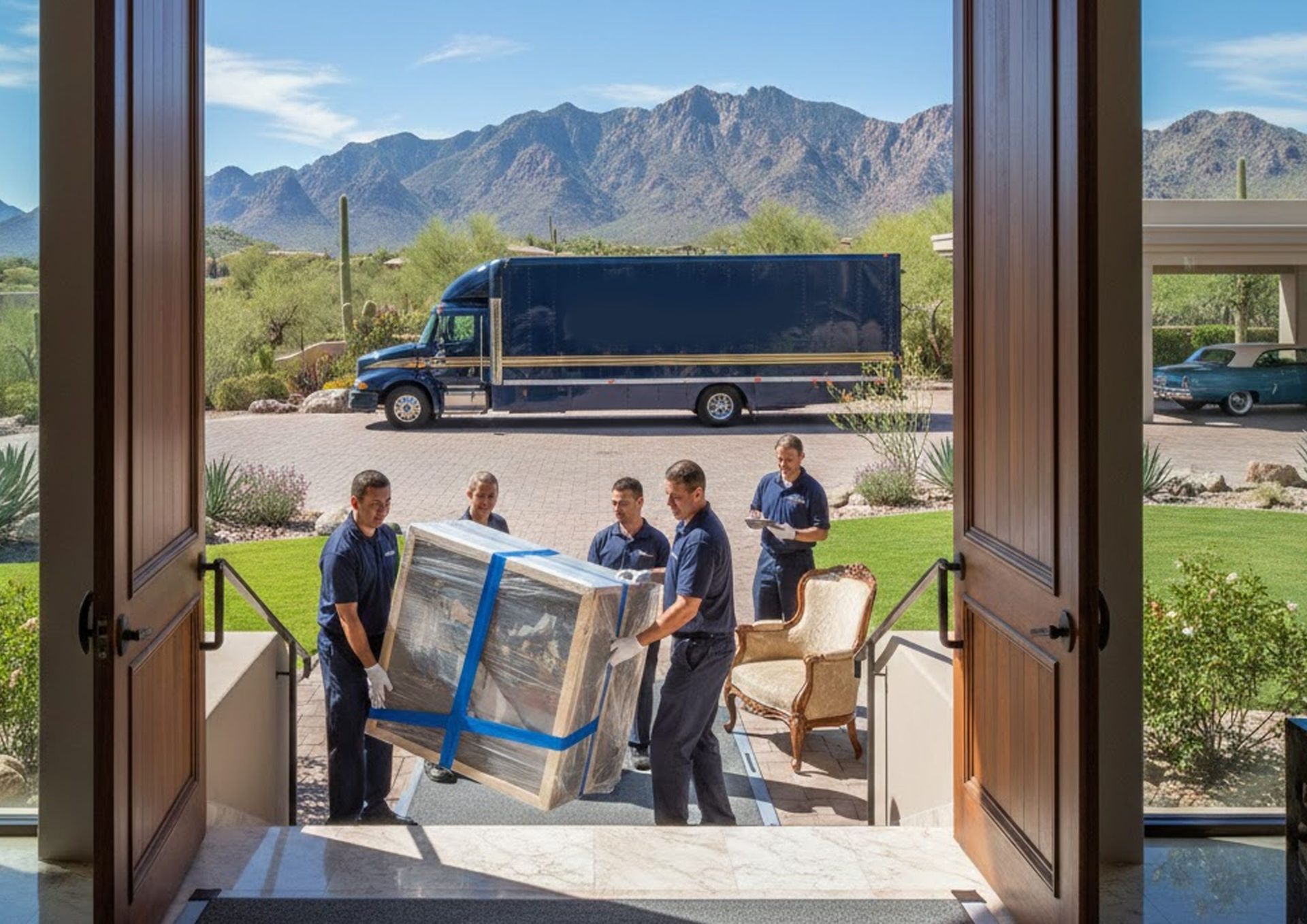
Edge and corner protection, a surface-safe barrier layer, and padded wrap. Transported upright on its edge, never stacked flat. Best for stable, framed pieces on local moves.
LEVEL 2
Art Cartons with Rigid Protection
Fitted art cartons with rigid face protection and corner guards, so nothing presses on the surface. A strong middle step for framed art, mirrors, and works behind glass.
LEVEL 3
Custom-Built Crates
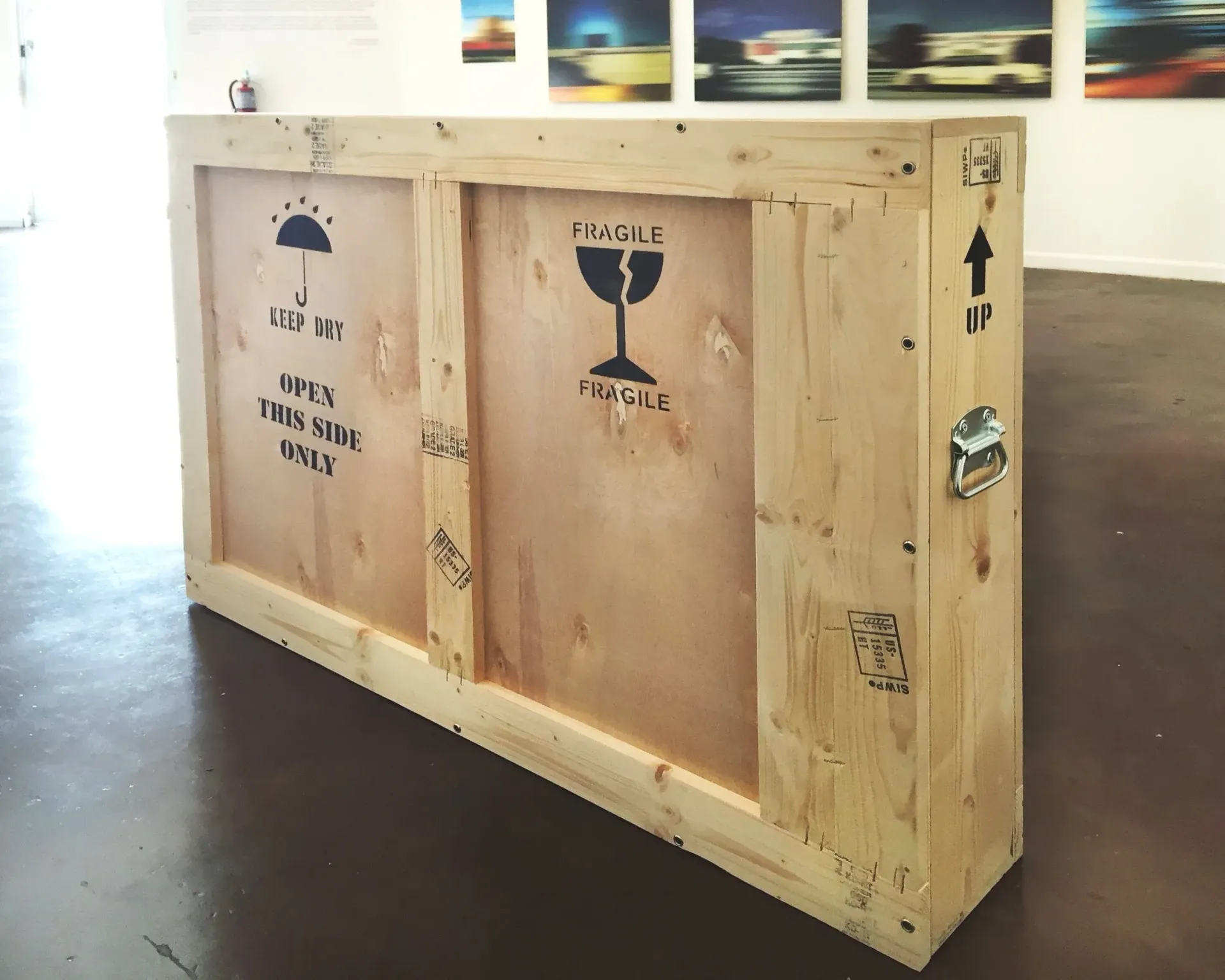
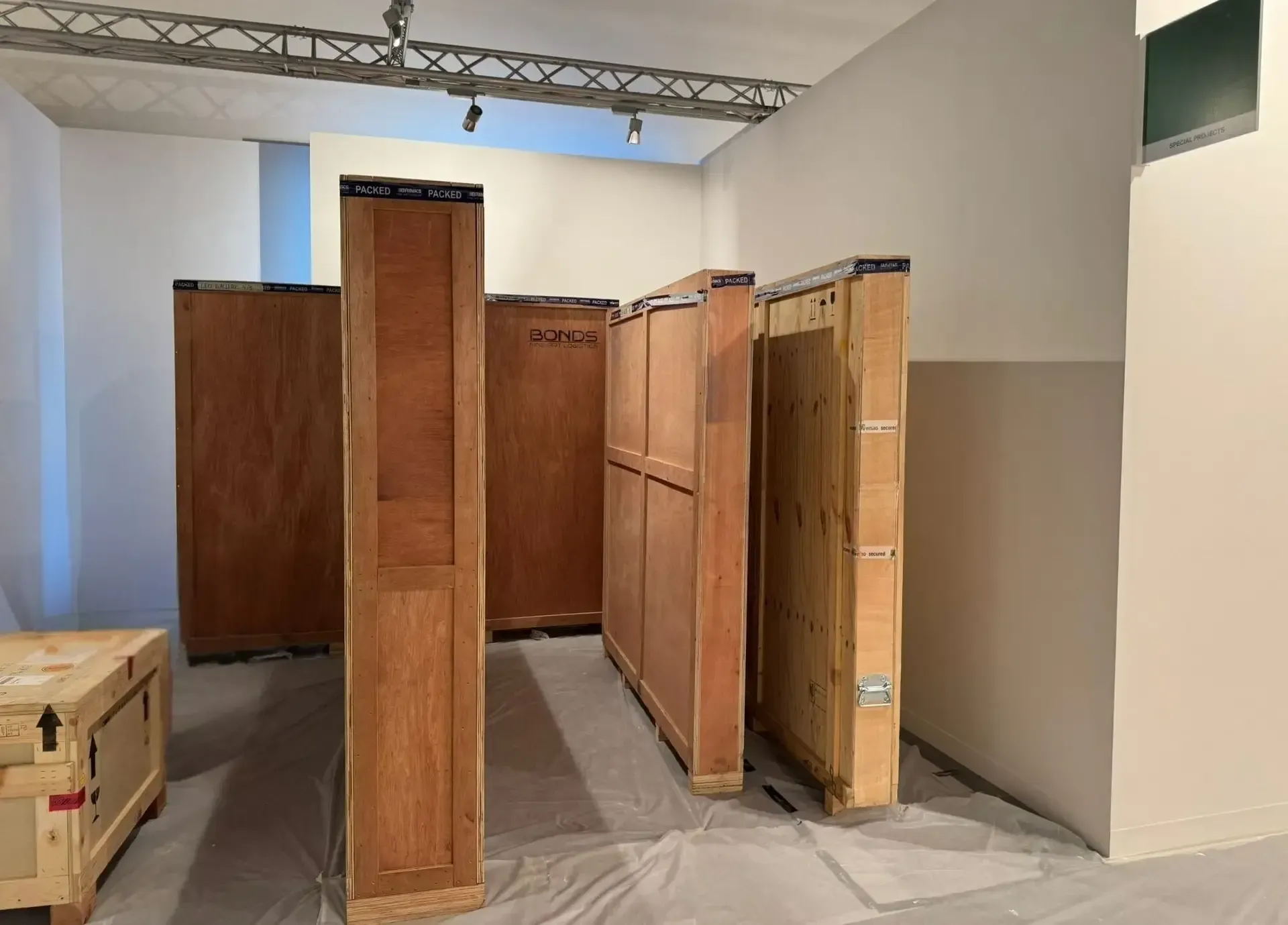
A crate built to the exact dimensions of your piece, with a foam-supported interior that holds it away from the walls. The right choice for high-value, oversized, or fragile work, and for long-distance moves or storage.
Crate and store:
a crate does double duty. The same protection that gets a piece through the move keeps it safe in storage afterward. Ask us about storage options
when you request your estimate.
How We Pack Fine Art: Oil Paintings vs. Acrylic Paintings
Oil and acrylic can look nearly identical on the wall, but they behave very differently in a truck. Here's how that changes the way we pack them.
OIL PAINTINGS
Slow to cure, quick to complain
- The risk:
Oil dries by slow oxidation, so the paint can stay sensitive beneath the surface for a long time, especially thick or recent work. Cold and sudden temperature swings can make older paint brittle and prone to cracking.
- What we avoid:
No plastic or bubble wrap against the paint. It can imprint texture and trap moisture.
- How we pack:
The face is protected with a non-contact barrier, using corner protection and a rigid cover that holds padding away from the paint. Large canvases are supported by the frame or stretcher, never by the canvas itself.
- How we move:
Upright on edge, face never against another face, and loaded last / off first to limit time in the truck.
- Special cases:
Very recent, unvarnished, or already-cracked work gets a conversation with you, and with your conservator if you have one, before anyone touches it.
ACRYLIC PAINTINGS
Flexible, but sticky when warm
- The risk:
Acrylic cures faster and flexes better than oil, but its surface can stay slightly tacky, especially when unvarnished or when it gets warm. Whatever touches it can stick, fuse, or leave an imprint.
- What we avoid:
Paper, plastic wrap, and bubble wrap resting directly on the paint, and long dwell time in a hot truck.
- How we pack:
A non-stick barrier or a non-contact spacer over the face, rigid protection on top, then padding. Cold can still crack acrylic, so temperature swings matter here too.
- Gallery-wrapped canvases:
Common with acrylic, these have painted edges and no frame to absorb a knock. We add edge and corner guards so nothing scuffs the sides.
- How we move:
Upright on edge, never stacked flat, with the truck kept out of direct heat while loaded.
Every artwork is different. Varnish, age, condition, and the artist's own materials all change the plan, which is why we look at the piece (or photos of it) before we quote.
The Surface Sensitivity Chart: What Each Type of Art Fears Most
| Type of Art |
Biggest Transit Risk |
Our Approach |
| Oil paintings
|
Cracking, surface imprints |
Non-contact face protection, supported by frame or stretcher, temperature care |
| Acrylic paintings
|
Sticking, imprints, scuffed edges |
Non-stick barrier or spacer, edge guards, avoid heat |
| Watercolors & works on paper
|
Moisture, glass breakage, bending |
Rigid backing, glass protected against shattering, kept flat or on edge in a dry vehicle |
| Pastels & charcoal
|
Loose pigment shaken free |
No contact with the surface, minimal vibration, careful handling |
| Gilded & ornate frames
|
Flaking leaf, broken ornament |
Foam-padded corners, carried by supporting the frame, often crated |
| Sculpture (bronze, stone, glass)
|
Weight, snapped protrusions, base damage |
Base separated where appropriate, weight supported, custom foam cradles or crate |
| Photographs & prints
|
Glass, light, creasing |
Rigid protection, acid-free materials, flat or on-edge transport |
| Tapestries & textiles
|
Creasing, crushing, moisture |
Rolled with clean protective layers rather than folded |
The Art Move Passport: Five Steps from Your Wall to Ours
Every high-value piece follows a path. Here's how we run it so there are no surprises.
- The 5-Photo Intake.
Send us the front, a close-up with light from the side (it shows the texture), the back, the corners, and a shot with a tape measure in frame. Use our photo and video quote form
to get started.
- The condition check.
Before anything is wrapped, we look over the piece with you and note any existing marks, so everyone starts from the same record.
- Packed for the medium.
Oil, acrylic, paper, glass, or bronze: each gets its own protection plan, from padded wrap to a custom crate.
- Last on, first off.
Art rides upright on its edge, loaded last and unloaded first, so it spends the least time in the truck.
- Acclimate, then unpack.
After a cold or hot ride, let a crated piece sit closed in its new room for a few hours so it can adjust before the lid comes off.
Plan the wall before moving day.
Mark each piece's spot with painter's tape and a small note. Our crew can place art right where you want it, and you won't have a crate sitting in the hallway while you decide.
Art Moving Built for Santa Barbara, Montecito, and Goleta
Santa Barbara homes have their own challenges: hillside driveways, narrow roads, gated Montecito estates, and a coastal climate with morning moisture and bright afternoon sun. We plan for the route as carefully as we plan for the piece, using truck access and, where needed, shuttle planning. Read our truck access guide for hillside homes, or see our help with senior and estate moves
when a collection is part of a bigger transition.
Do's and Don'ts When Moving Art Yourself
Do
- Carry framed art upright, supported by the frame with both hands.
- Keep pieces away from heat, direct sun, and damp.
- Photograph each piece before it's wrapped.
- Check your homeowner's or fine art policy and get a current valuation for high-value work.
Don't
- Put tape, plastic wrap, or bubble wrap directly on a painted surface.
- Stack paintings face to face, or lay them flat under other items.
- Carry a canvas by the stretcher bars or press on the back of the canvas.
- Leave art in a parked vehicle in the heat.
Fine Art Moving FAQ
When should I crate a painting instead of just wrapping it?
Crate it if the piece is high in value or irreplaceable, oversized, going long distance or into storage, or has a fragile surface or frame. For a local move of a sturdy, stable piece, padded art wrap is often enough. Our Crate Check above can help you decide.
How do you pack oil paintings differently from acrylic paintings?
Oil can stay sensitive for a long time and can crack in cold, so we use non-contact face protection and avoid anything that presses on the paint. Acrylic can feel slightly tacky when warm, so we use a non-stick barrier or a spacer and avoid heat. Both travel upright on their edge and are supported by the frame, not the canvas.
Can you move a painting that's still wet or very recently finished?
Please tell us up front. Recent or unvarnished work needs a plan made with you, and with your conservator or the artist if possible, before it's handled.
Do you move sculptures, mirrors, and framed work behind glass?
Yes. Sculptures get weight support and, where it helps, custom foam cradles or a crate. Glass is protected so a break doesn't harm the artwork. See the chart above for how we approach each medium.
Can my crated art go into storage after the move?
Yes. A crate protects art in storage as well as in transit. Ask us about storage when you request your free estimate.
How do I get a quote for moving fine art?
Call 805-705-1066 or send photos of the piece through our photo and video quote form. We'll ask about the medium, size, frame, and route, then give you a free estimate.
Moving Art You Can't Replace?
Send us a few photos or give us a call. We'll recommend the right level of protection and give you a free estimate.
Call 805-705-1066
Get a Photo Quote