Piano, Safe, Fine Art, and Hot Tub Moving in Santa Barbara County
Some things in your home aren't meant to be rushed. Pianos, gun safes, framed art, sculptures, and hot tubs all need their own plan — the right equipment, the right number of hands, and someone who's done it before. This page is for homeowners, estate executors, interior designers, and businesses in Santa Barbara, Goleta, Montecito, Carpinteria, and the Santa Ynez Valley who have one of these items on their move list and want it handled with real care, not guesswork.
Specialty Movers in Santa Barbara
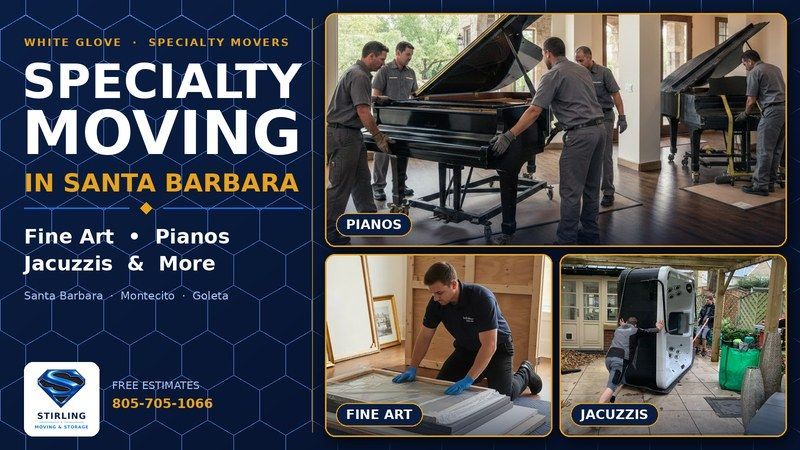
Pianos, hot tubs, fine art, antiques, gun safes, and statues. Some things need more than a standard move, and we plan every one around its weight, fragility, and the path it has to travel.
- Cal-T 192172
- Free Written Estimate
- Photos or Video Quotes
Specialty Moving in Santa Barbara: What Are You Moving?
Choose your item, or filter by what makes it tricky, then go straight to the details.
Piano Moving
Uprights, spinets, baby grands, and more, moved with the right equipment and a planned route.
- Protection for the finish and inner mechanism
- Stairs and tight turns planned in advance
- Careful placement in the new space
Hot Tub & Jacuzzi Moving
Spas are heavy, awkward, and often tucked into backyards. We plan the route before anything moves.
- Backyard access and gate clearances reviewed
- Equipment suited to heavy, bulky loads
- Planning for disconnection and reconnection
Fine Art & Antiques
Paintings, sculpture, antique furniture, and treasured pieces, with careful wrapping, padding, and crating available.
- Surface-safe protection for artwork
- Crating for high-value or fragile pieces
- Organized handling for full collections
Gun Safes & Heavy Items
Safes, statues, and other bulky, valuable pieces that take planning, equipment, and a skilled crew.
- Weight and path assessed before the move
- Floor and doorway protection
- Secure transport and placement
Find the Right Specialty Service
Tell us what you are moving and how hard it is to reach. We will point you to the right page and what to prepare.
How a Specialty Move Works
A specialty move is won in the planning. Tap a step to see what happens.
1. Tell Us About Your Item
Share what you are moving, its size and approximate weight, and where it is going. You can call us, meet in person, or send photos or video of the item and the path it has to travel.
2. We Plan the Route and the Equipment
We look at stairs, doorways, turns, driveways, and gates at both ends, then choose the crew, equipment, and protection that fit. You get a clear written estimate before anything is scheduled.
3. We Protect the Item and the Property
Your item gets the right protection for its type, from padding and wrapping to custom crating where it makes sense. We also protect floors, walls, and doorways along the route.
4. We Move It and Set It in Place
Our crew moves the item along the planned route, secures it for transport, and places it where you want it in the new space, so it is ready to use or display.
Why Santa Barbara Chooses Stirling for Specialty Moves
Specialized experience, clear communication, and a plan for every piece.
Planning a bigger move? Explore more services
Specialty Moving: Your Questions Answered
Common questions about moving pianos, hot tubs, art, safes, and other special items in Santa Barbara County.
What is specialty moving?
Specialty moving covers items that need extra equipment, planning, or care beyond a standard move, such as pianos, hot tubs, fine art, antiques, gun safes, and statues.
What specialty items do you move in Santa Barbara?
We move pianos, hot tubs and jacuzzis, fine art and antiques, gun safes, statues, and other large, bulky, or valuable items. If you do not see your item listed, call us and we will tell you how we would approach it.
Can specialty items be moved with a regular home move?
Yes. Specialty items can be added to a local or long-distance move, or moved on their own. Tell us what is going and we will quote it together or separately, whichever suits you.
How do I get a quote for a specialty item?
Call (805) 705-1066 or use our online quote form. Photos or video of the item and the path it has to travel help us plan accurately, and every estimate is clear and written.
Do you offer crating for valuable items?
Yes, crating services are available for pieces that need extra protection, such as fine art and fragile antiques. We will recommend the right protection once we know what you are moving.
How should I prepare a specialty item for moving day?
Measure the item and the doorways, stairs, and gates it must pass through, clear the path, and take photos. Share these details with us ahead of time so we can bring the right crew and equipment.
Have Something Special to Move? Let's Plan It.
Tell us what you are moving and send photos or video if you can. We will recommend the right approach and give you a clear written estimate.
How We Handle Each Specialty Item
Pianos: We use piano boards or skid boards, padded straps, and ramps, with a minimum two-person team for uprights and three or more for grands, protecting the cabinet, legs, and pedals in transit.
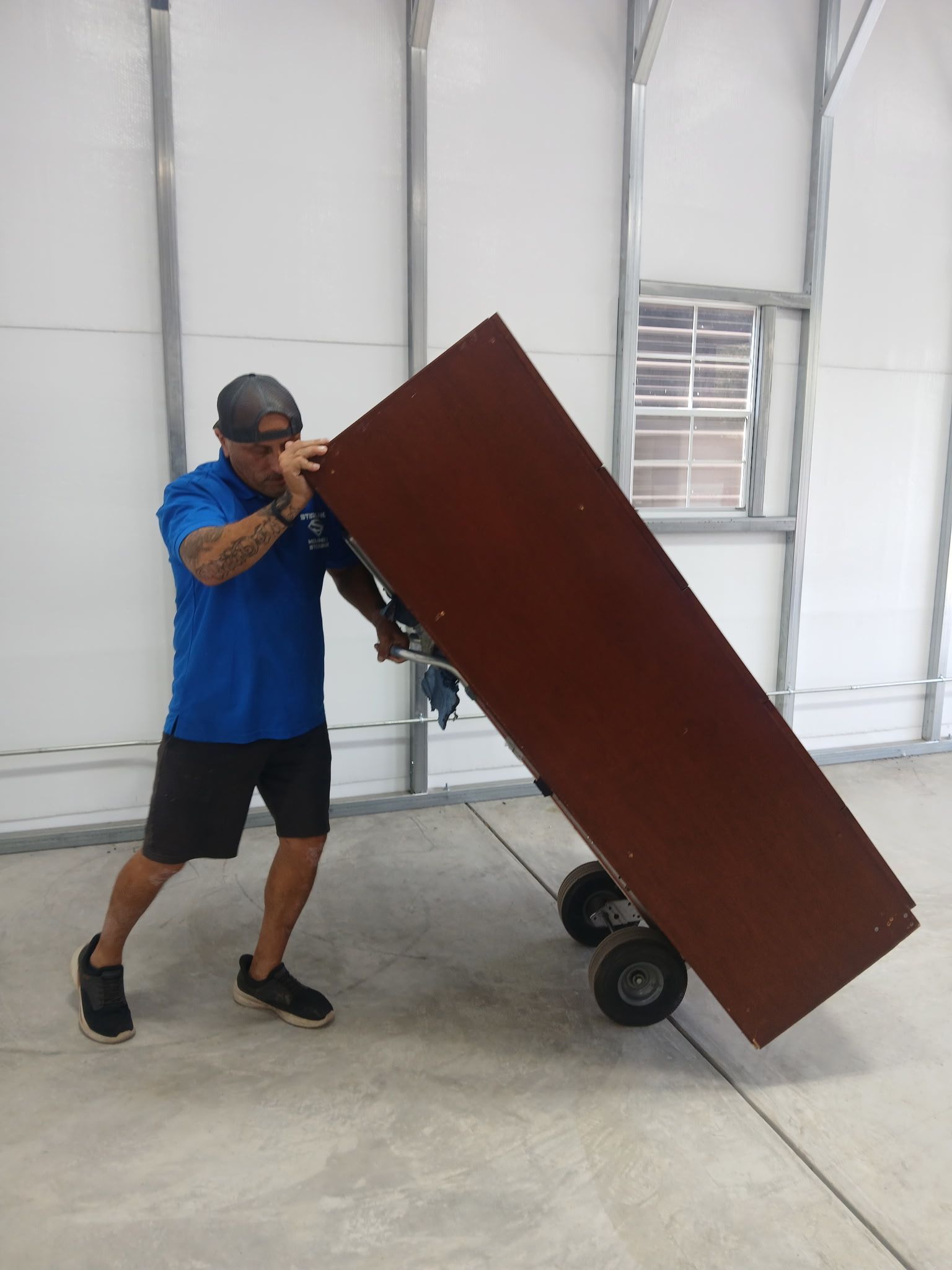
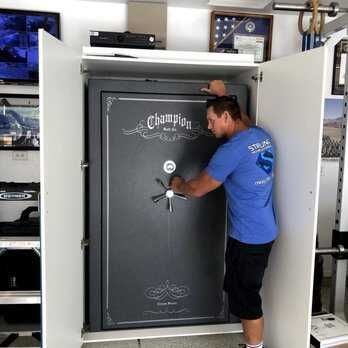
Safes: Heavy units move on safe dollies or hydraulic lift gates, with floor and doorway protection. We measure ahead of time to confirm the safe will clear hallways and stairs.
Fine Art and Mirrors: Custom padding, corner protectors, and flat-pack crating for valuable or fragile pieces, plus climate-aware handling to avoid temperature or moisture damage in transit.
Hot Tubs and Jacuzzis: We coordinate draining and disconnection, then use tub dollies or a small crew lift depending on size, protecting decking, gates, and doorways along the path.
Piano and Hot Tub Moving in Santa Barbara
Pianos and hot tubs have two things in common: they're heavy, and they don't forgive mistakes. A piano is a precision instrument that happens to weigh as much as a small appliance collection. A hot tub is a fragile shell and a plumbing system in one awkward, oversized package. Both are a bad fit for a borrowed dolly and a few friends.
Here's how we approach piano moving and hot tub (jacuzzi) moving in Santa Barbara, Montecito, and Goleta, including two quick tools to size up your own move.
Piano Moving
Whether it's a family upright that's been in the hallway for decades or a grand that anchors the living room, the plan starts with the piano type, the route, and where it's going.
Upright vs. Grand: How We Move Each
Spinets, consoles, and studio uprights
- Moved upright on a piano dolly, secured with straps and padded wrap.
- Keyboard lid closed and protected, with pads over the finish and corners.
- Never rolled any real distance on its own casters, which aren't built for it.
- A stair plan is made before lifting, because stairs are where most piano injuries and damage happen.
A different job entirely
- The lid, music desk, and pedal assembly come off, and the legs are removed so the piano can be carried on its side.
- The piano is secured to a padded piano board, then wrapped in protective pads.
- Everything is reassembled and checked for level at the new location.
- The pedal assembly and legs are handled separately, since they carry the piano's load.
| Piano Type | Main Challenge | Our Approach |
|---|---|---|
| Spinet / console | Compact but dense, with small casters | Dolly and straps, with a plan for stairs and steps |
| Studio / full upright | Tall, top-heavy, and very heavy | Extra hands, secured upright, protected finish |
| Baby grand | Awkward shape; legs and pedals need to come off | Disassembled, secured on a piano board, padded |
| Grand / large grand | Weight, length, and turning radius | Larger crew, route planned in advance, board and wrap |
| Antique pianos | Aging wood, delicate finish, and fragile parts | Extra padding, slower handling, a pre-move conversation |
| Digital / hybrid / player pianos | Electronics, plus the weight of a real piano on hybrids | Cables and modules protected, handled according to the model |
The Piano Move Difficulty Meter
Check everything that applies to your piano and your route. It's a starting point, and we confirm the details when we give you a free estimate.
The Five-Point Route Check (Do This Before Moving Day)
Most piano problems aren't about the piano. They're about the path. Walk the route the way a mover would.
- Measure the narrowest point. Doorways and hallways are the usual culprits. Write down the smallest width, not the average.
- Find the pivot. An L-shaped hallway or a turn at the bottom of a staircase needs room for the length of the piano to swing, not just its width.
- Count the steps. Note every step, landing, and threshold, indoors and out.
- Look at the floors. Hardwood, tile, and soft surfaces all need protection. A piano's weight sits on small points, which can dent floors.
- Choose the landing spot. Pick the final location now so the piano goes straight to where it belongs, instead of being moved twice.
Send photos or video of the route through our photo and video quote form. Showing us the stairs and the turns lets us plan the crew and the equipment before we arrive.
After the Move: Settling In Your Piano
Where to place it
- Away from direct sunlight, heating and cooling vents, and fireplaces.
- Ideally on an interior wall rather than a cold exterior wall or one near a damp area.
- On a floor that can handle the weight, with protective cups or pads under the casters or legs.
The tuning timeline
- A move can change a piano's environment, so give it a few weeks to adjust to its new room.
- After that, schedule a tuning with a qualified piano technician.
- Coastal air changes humidity from season to season, so consider asking your technician about a humidity-control system.
Want more detail on prepping yourself? Read our Piano Moving Guide.
Hot Tub (Jacuzzi) Moving
A hot tub might look like a sturdy tub of plastic, but inside is a shell, jets, pumps, and plumbing that can crack or leak if it's twisted, dropped, or dragged. And the route to the backyard is usually where the trouble starts.
Hot Tub Moving: Before, During, and After
- Power off, then drain. Have a licensed electrician disconnect the power. Then fully drain the tub: a filled hot tub holds hundreds of gallons and weighs far too much to move with water in it.
- Clean and dry the shell. Remove the filters, wipe the interior, and get as much water out of the jets and lines as you can, so nothing sloshes or grows mold in transit.
- Remove the cover and loose parts. Hot tub covers are bulky and can be heavy, so they travel separately. Steps, headrests, and accessories are packed on their own.
- Move it as a unit. Our crew lifts using proper equipment and secures it so the shell and cabinet don't flex or take stress. We don't drag a tub or lift it by the shell lip.
- Set it on a level pad. The new spot needs a solid, level base that can carry the weight of a filled tub plus people.
- Reconnect and refill. A licensed electrician reconnects the power, and local permit rules may apply. Once it's refilled and running, check for leaks.
Can Your Hot Tub Fit Through? The Clearance Check
Gates, side yards, and doorways are the number one reason a hot tub move gets complicated. Enter your measurements in inches to see where you stand.
The Hot Tub Clearance Check
Tricky Hot Tub Situations and What We Do About Them
| Situation | What It Means | Typical Solution |
|---|---|---|
| Narrow gate or side yard | The tub may not pass flat | Move it on its edge if the manufacturer allows, or take down a gate or fence panel |
| Steep slope or hillside lot | Footing, weight, and braking are all harder | Larger crew, planned route, and the right equipment. See our truck access guide |
| No ground-level path | Walls, fences, or buildings block every route | We'll tell you honestly if outside rigging or a crane is the safe answer |
| Tub set into a deck | It may be tied into the structure | Deck work first, then the tub. We'll check on the site |
| Swim spa or very large tub | Size and weight go well beyond a standard tub | Specialty planning and a site visit before a quote |
Moving a hot tub at the same time as the house? Tell us up front so we can plan the order of the day. The tub is often the first thing off, and its prep (power off, drain, dry) should be done before the crew arrives.
Do's and Don'ts for Pianos and Hot Tubs
Do
- Measure the route at its narrowest point before you request a quote.
- Send photos or video of the stairs, turns, gates, and the final spot.
- Have a licensed electrician handle a hot tub's power disconnect and reconnect.
- Tell us about any stairs, slopes, or hillside access up front.
Don't
- Try to move a piano on stairs with friends and a hand truck.
- Roll a piano a long distance on its casters.
- Move a hot tub with water in it, or drag it on its base.
- Set a tub or piano down in a spot you haven't checked first.
Piano and Hot Tub Moving FAQ
Do you move both grand pianos and upright pianos?
Yes. Uprights move upright on a piano dolly. Grand and baby grand pianos are partly disassembled and carried on their side on a padded piano board. Tell us the type and where it's going, and we'll plan the crew accordingly.
Can you move a piano up or down stairs?
Stairs are the most difficult part of piano moving, so we plan for them before the lift. Let us know how many steps there are and what the turns look like. Photos or a short video help us plan the crew and equipment.
How long should I wait to tune my piano after a move?
Give the piano a few weeks to adjust to its new room, then schedule a tuning with a qualified piano technician. Avoid placing it near vents, direct sun, or damp walls.
Do I need to drain my hot tub before it's moved?
Yes. The tub should be fully drained, with the power safely disconnected by a licensed electrician, before it's moved. A tub with water in it is far too heavy and risks damaging the shell and plumbing.
Will my hot tub fit through my gate or side yard?
Use the Clearance Check above for a quick answer. If the gap is tight, we may move the tub on its edge if the manufacturer allows it, or recommend removing a gate or fence panel. If there's no ground path at all, we'll tell you honestly what the safe options are.
How do I get a quote for moving a piano or hot tub?
Call 805-705-1066 or send photos of the piece and the route through our photo and video quote form. We'll ask about type, size, stairs, and access, then give you a free estimate.
Ready to Move a Piano or Hot Tub?
Send us a few photos or give us a call. We'll look at the piece and the route, then give you a free estimate.
Call 805-705-1066 Get a Photo QuoteOur Specialty Move Process
1. Phone or Photo Assessment: Call us or send a few photos of the piano, safe, art, or hot tub so we can plan the right crew size and equipment before moving day.
2. On-Site Walkthrough (if needed): For larger or trickier items, we do a quick walkthrough to check doorways, stairs, and parking so there are no surprises.
3. Careful Packing and Loading: We pad, wrap, crate, or strap the item using the right gear for its size and fragility, then load it securely for transport.
4. Placement and Final Check: We carry the item into its new spot, remove padding, and walk through the result with you before we leave.
Fine Art Moving and Crating in Santa Barbara
A painting can look tough and still be one bad bump away from a crack, a dent, or an imprint you can never undo. Whether it's a gallery-wrapped acrylic, a century-old oil, or a bronze for the front courtyard, fine art moving in Santa Barbara comes down to three decisions: how the surface is protected, how the piece is supported, and whether it should travel wrapped or in a crate.
Below is how we think about each one, including the guide we use to decide when to crate artwork, how we pack oil paintings differently from acrylics, and a quick tool to see which level of protection fits your piece.
When to Crate Artwork: A Simple Guide
Crating isn't always necessary, and it isn't always overkill. Here's how to tell the difference.
A crate is the right call when…
- The piece is high in value or can't be replaced (one-of-a-kind, sentimental, or documented).
- It's oversized and flexes or needs more than two people to carry safely.
- It's traveling long distance, by freight, or will be handled many times.
- It's going into storage before or after the move.
- The surface is fragile: thick impasto, craquelure, flaking paint, loose pastel or charcoal.
- The frame is antique, gilded, or ornate, or the piece is behind large glass.
- It's a sculpture with protrusions, thin supports, or a separate base.
Padded art wrap is often enough when…
- The move is local with a single pickup and delivery.
- The frame is sturdy and the surface is stable and cured.
- The piece is a manageable size and can be carried upright by a team.
- You plan to hang it again within days, not months.
- The truck access is straightforward, with short carries and no tight turns.
Not sure which side you're on? Use the tool below.
The 60-Second Crate Check
Check everything that applies to your piece. It's a starting point, and we confirm the final plan with you on your free estimate.
Our Art Crating & Protection Options
Think of it as a ladder. We match the level of protection to the artwork, the route, and how long it will be in transit or storage.
Padded Art Wrap
Edge and corner protection, a surface-safe barrier layer, and padded wrap. Transported upright on its edge, never stacked flat. Best for stable, framed pieces on local moves.
Art Cartons with Rigid Protection
Fitted art cartons with rigid face protection and corner guards, so nothing presses on the surface. A strong middle step for framed art, mirrors, and works behind glass.
Custom-Built Crates
A crate built to the exact dimensions of your piece, with a foam-supported interior that holds it away from the walls. The right choice for high-value, oversized, or fragile work, and for long-distance moves or storage.
Crate and store: a crate does double duty. The same protection that gets a piece through the move keeps it safe in storage afterward. Ask us about storage options when you request your estimate.
How We Pack Fine Art: Oil Paintings vs. Acrylic Paintings
Oil and acrylic can look nearly identical on the wall, but they behave very differently in a truck. Here's how that changes the way we pack them.
Slow to cure, quick to complain
- The risk: Oil dries by slow oxidation, so the paint can stay sensitive beneath the surface for a long time, especially thick or recent work. Cold and sudden temperature swings can make older paint brittle and prone to cracking.
- What we avoid: No plastic or bubble wrap against the paint. It can imprint texture and trap moisture.
- How we pack: The face is protected with a non-contact barrier, using corner protection and a rigid cover that holds padding away from the paint. Large canvases are supported by the frame or stretcher, never by the canvas itself.
- How we move: Upright on edge, face never against another face, and loaded last / off first to limit time in the truck.
- Special cases: Very recent, unvarnished, or already-cracked work gets a conversation with you, and with your conservator if you have one, before anyone touches it.
Flexible, but sticky when warm
- The risk: Acrylic cures faster and flexes better than oil, but its surface can stay slightly tacky, especially when unvarnished or when it gets warm. Whatever touches it can stick, fuse, or leave an imprint.
- What we avoid: Paper, plastic wrap, and bubble wrap resting directly on the paint, and long dwell time in a hot truck.
- How we pack: A non-stick barrier or a non-contact spacer over the face, rigid protection on top, then padding. Cold can still crack acrylic, so temperature swings matter here too.
- Gallery-wrapped canvases: Common with acrylic, these have painted edges and no frame to absorb a knock. We add edge and corner guards so nothing scuffs the sides.
- How we move: Upright on edge, never stacked flat, with the truck kept out of direct heat while loaded.
Every artwork is different. Varnish, age, condition, and the artist's own materials all change the plan, which is why we look at the piece (or photos of it) before we quote.
The Surface Sensitivity Chart: What Each Type of Art Fears Most
| Type of Art | Biggest Transit Risk | Our Approach |
|---|---|---|
| Oil paintings | Cracking, surface imprints | Non-contact face protection, supported by frame or stretcher, temperature care |
| Acrylic paintings | Sticking, imprints, scuffed edges | Non-stick barrier or spacer, edge guards, avoid heat |
| Watercolors & works on paper | Moisture, glass breakage, bending | Rigid backing, glass protected against shattering, kept flat or on edge in a dry vehicle |
| Pastels & charcoal | Loose pigment shaken free | No contact with the surface, minimal vibration, careful handling |
| Gilded & ornate frames | Flaking leaf, broken ornament | Foam-padded corners, carried by supporting the frame, often crated |
| Sculpture (bronze, stone, glass) | Weight, snapped protrusions, base damage | Base separated where appropriate, weight supported, custom foam cradles or crate |
| Photographs & prints | Glass, light, creasing | Rigid protection, acid-free materials, flat or on-edge transport |
| Tapestries & textiles | Creasing, crushing, moisture | Rolled with clean protective layers rather than folded |
The Art Move Passport: Five Steps from Your Wall to Ours
Every high-value piece follows a path. Here's how we run it so there are no surprises.
- The 5-Photo Intake. Send us the front, a close-up with light from the side (it shows the texture), the back, the corners, and a shot with a tape measure in frame. Use our photo and video quote form to get started.
- The condition check. Before anything is wrapped, we look over the piece with you and note any existing marks, so everyone starts from the same record.
- Packed for the medium. Oil, acrylic, paper, glass, or bronze: each gets its own protection plan, from padded wrap to a custom crate.
- Last on, first off. Art rides upright on its edge, loaded last and unloaded first, so it spends the least time in the truck.
- Acclimate, then unpack. After a cold or hot ride, let a crated piece sit closed in its new room for a few hours so it can adjust before the lid comes off.
Plan the wall before moving day. Mark each piece's spot with painter's tape and a small note. Our crew can place art right where you want it, and you won't have a crate sitting in the hallway while you decide.
Art Moving Built for Santa Barbara, Montecito, and Goleta
Santa Barbara homes have their own challenges: hillside driveways, narrow roads, gated Montecito estates, and a coastal climate with morning moisture and bright afternoon sun. We plan for the route as carefully as we plan for the piece, using truck access and, where needed, shuttle planning. Read our truck access guide for hillside homes, or see our help with senior and estate moves when a collection is part of a bigger transition.
Do's and Don'ts When Moving Art Yourself
Do
- Carry framed art upright, supported by the frame with both hands.
- Keep pieces away from heat, direct sun, and damp.
- Photograph each piece before it's wrapped.
- Check your homeowner's or fine art policy and get a current valuation for high-value work.
Don't
- Put tape, plastic wrap, or bubble wrap directly on a painted surface.
- Stack paintings face to face, or lay them flat under other items.
- Carry a canvas by the stretcher bars or press on the back of the canvas.
- Leave art in a parked vehicle in the heat.
Fine Art Moving FAQ
When should I crate a painting instead of just wrapping it?
Crate it if the piece is high in value or irreplaceable, oversized, going long distance or into storage, or has a fragile surface or frame. For a local move of a sturdy, stable piece, padded art wrap is often enough. Our Crate Check above can help you decide.
How do you pack oil paintings differently from acrylic paintings?
Oil can stay sensitive for a long time and can crack in cold, so we use non-contact face protection and avoid anything that presses on the paint. Acrylic can feel slightly tacky when warm, so we use a non-stick barrier or a spacer and avoid heat. Both travel upright on their edge and are supported by the frame, not the canvas.
Can you move a painting that's still wet or very recently finished?
Please tell us up front. Recent or unvarnished work needs a plan made with you, and with your conservator or the artist if possible, before it's handled.
Do you move sculptures, mirrors, and framed work behind glass?
Yes. Sculptures get weight support and, where it helps, custom foam cradles or a crate. Glass is protected so a break doesn't harm the artwork. See the chart above for how we approach each medium.
Can my crated art go into storage after the move?
Yes. A crate protects art in storage as well as in transit. Ask us about storage when you request your free estimate.
How do I get a quote for moving fine art?
Call 805-705-1066 or send photos of the piece through our photo and video quote form. We'll ask about the medium, size, frame, and route, then give you a free estimate.
Moving Art You Can't Replace?
Send us a few photos or give us a call. We'll recommend the right level of protection and give you a free estimate.
Call 805-705-1066 Get a Photo QuoteGet Your Free Specialty Moving Quote
Gun safes, statues, art, pool tables, and other large or valuable items each have their own challenges. Tell us what you're moving so we can send the right crew and equipment and give you an accurate quote.
- Free, no-obligation quote
- Specialty equipment and trained crews
- Careful, protected handling
Prefer to talk it through? Call 805-705-1066.
What Affects the Price of a Specialty Move
Specialty moves are priced by the item, the access, and the crew it takes to move it safely — not a flat rate. We'll walk through these factors with you before giving a written estimate.
Item type and size: a baby grand piano, a 1,500 lb safe, and a six-person hot tub each need different equipment and crew sizes.
Access and distance: stairs, narrow hallways, long carries from the truck to the door, and tight parking all add time.
Crating or custom padding: fine art or antiques sometimes need a custom crate or extra protective materials.
Disconnection or prep work: hot tubs need draining and disconnecting beforehand; this can be done by us or coordinated with a specialist depending on the setup.
Every specialty move gets a written estimate with no surprise fees, confirmed before the job starts.
Specialty Moves We've Handled
A look at real jobs — pianos, safes, art, and hot tubs moved with the right equipment and a steady hand.
Specialty Moving Questions
Do you move pianos up or down stairs?
Yes, with the right crew size and equipment for the piano's weight and the stairway's width. Let us know the piano type and stair layout when you call so we can plan the crew.Can you move a safe without damaging my floors?
We use floor and doorway protection along with safe dollies or lift gates for heavy units, and we measure doorways and hallways ahead of time to confirm clearance.How do you protect fine art and mirrors during the move?
We use custom padding, corner protectors, and crating for valuable or fragile pieces, and we handle them with climate awareness to avoid temperature or moisture damage.Do I need to drain my hot tub before you move it?
In most cases yes — draining and disconnecting happens before moving day. We'll talk through the setup with you ahead of time so it's ready to go.
Specialty Moving Across Santa Barbara County
We handle piano, safe, art, and hot tub moves throughout the county. Find your area below for local details.
Get a Written Estimate for Your Specialty Move
Helpful Resources for Specialty Items
Care tips and local music and arts organizations for pianos and other treasured pieces.
Piano Technicians Guild
Find a certified technician to retune your piano after a move. Visit ptg.org
Music Academy of the West
A Santa Barbara music institution serving local musicians. Visit musicacademy.org
Protect Your Move
Federal guidance on your rights and valuation coverage. Visit protectyourmove.gov
Free Moving Tools
Make Your Move a Little Easier
Our free moving tools help you plan and organize your move from start to finish. Try the moving checklist, packing planner, and cost estimator. They are completely free and need no sign-up.